LearnMachine: AI Avatar Teachers for Interactive Learning and Training
Most training material is a document nobody reads twice: a PDF policy pack, a PowerPoint deck, a Word document of "mandatory reading." LearnMachine takes that same document and turns it into something a learner can actually talk to - an avatar-hosted presentation that answers questions, goes deeper on request, and tests what's just been learned. Launched in May this year and built on Trulience's avatar platform, it's already delivering interactive learning at scale into care homes across the UK, and it's a good example of what AI teaching looks like once you take the avatar out of the demo and put it to work.
What Is LearnMachine?
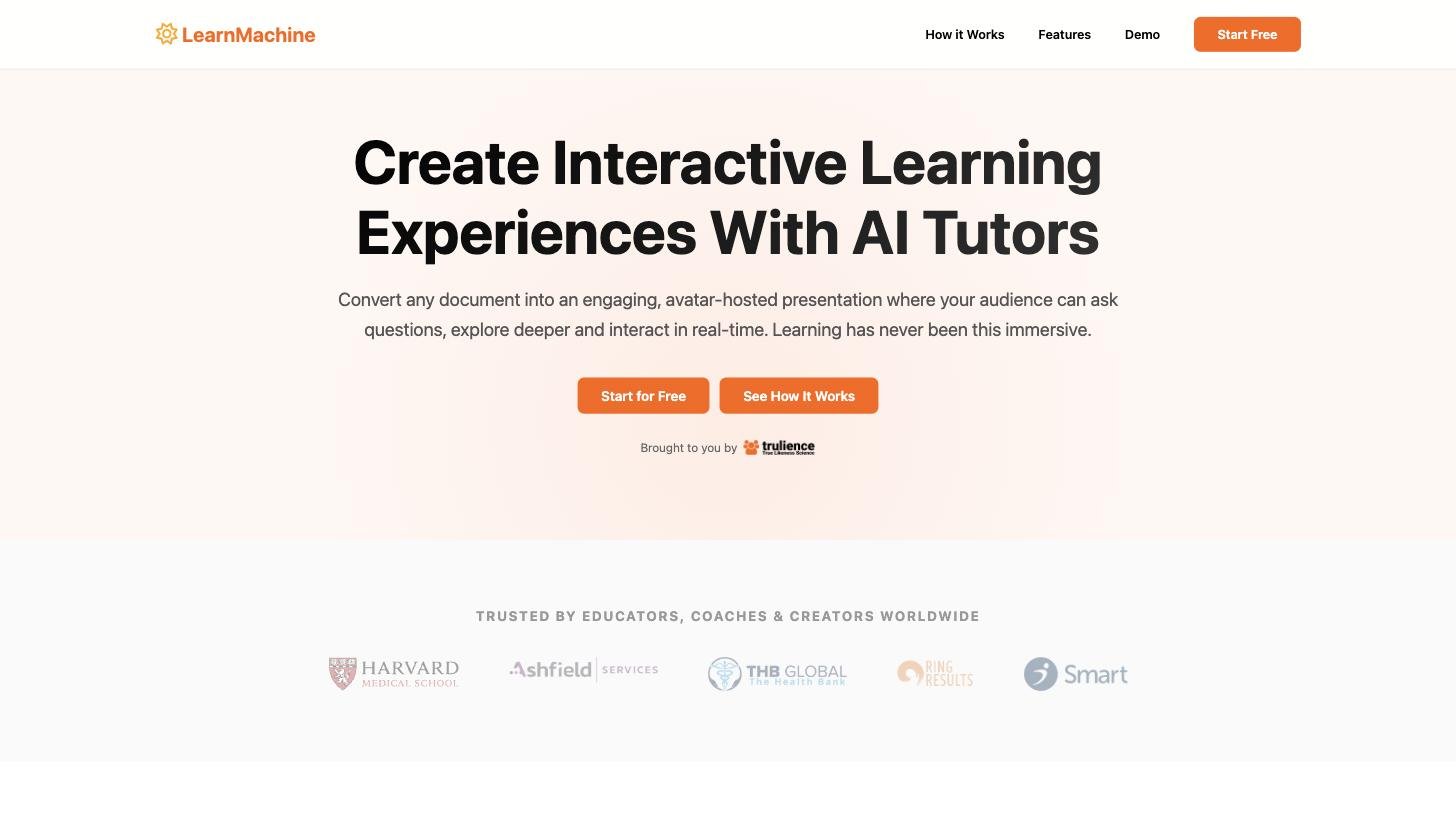
LearnMachine is a Trulience product that converts any PDF, PowerPoint or Word document into an interactive, avatar-hosted lesson. Upload the source material and an avatar host presents it as a guided walkthrough rather than a wall of slides - and unlike a recorded video, the audience can interrupt: ask a question, request an example, or ask for a concept to be explained a different way, and the avatar answers in real time instead of ploughing on regardless. That's the difference between interactive teaching and just narrating a deck out loud - the lesson responds to the person in front of it.
From Dull Slides to AI Teaching That Sticks
The brief for LearnMachine was simple: most presentations are boring, and boring doesn't teach anyone anything. Swapping static slides for an avatar teacher changes that - not just cosmetically, but in what the learner can do. They can ask "why" mid-lesson. They can ask for a harder example, or an easier one. A subject that would normally be skimmed and forgotten becomes something closer to a conversation with a patient, knowledgeable tutor who never gets tired of the same question twice.
And because the avatar is the host, it can be almost anyone. Trulience's avatar platform lets you choose how the teacher looks and sounds, which opens up a kind of personalised learning a static deck never could. Imagine Sir Isaac Newton walking students through gravity, or Marie Curie giving the introduction to radioactivity - a genuinely engaging way to put a face and a voice to the subject, delivered affordably and at scale rather than as a one-off production.
Regulatory Training in UK Care Homes, Delivered as Interactive Training
The clearest proof of this in practice is care. LearnMachine is already delivering interactive learning at scale into care homes across the UK, where carers have regulatory obligations to keep their skills training current - but little spare time to sit through it on someone else's schedule. LearnMachine lets each carer work through that training at their own pace, at times that actually fit their shift pattern, while still covering the same regulated material in full.
For the training firms behind that content, the benefit is just as direct. Delivering it through an avatar removes much of the cost of live trainers repeating the same session over and over, while giving providers real confidence that the training stays fully on track - every learner covers the same ground, answers the same checks, and the record of who has completed what is unambiguous. That combination - lower delivery cost and consistent, trackable coverage - is what makes avatar training genuinely practical for regulated industries, not just an interesting demo.
Beyond Teaching: Testing and Interview-Style AI Training
LearnMachine doesn't stop at presenting. It can test learners' knowledge and their ability to progress further into a lesson, gating deeper material until the basics are demonstrated. Assessment isn't limited to multiple choice, either - the avatar can gather text, audio and video responses, and mark answers in real time, which matters for training that depends on how someone explains themselves, not just whether they tick the right box.
That same capability turns LearnMachine into something more than a training tool: an interview-style assessment, recording how a candidate thinks on their feet in response to a live, spoken question rather than a static application form. Whether the goal is refresher training for existing staff or screening for new ones, the interaction is the same avatar-led conversation - it just points at a different outcome.
See LearnMachine in Action
The short clip below shows LearnMachine's interactive slideshow in practice - a document turned into an avatar-led presentation that answers questions, teaches concepts, delivers assessments and adapts to its audience in real time.
Watch on YouTube: Trulience | Interactive Slideshow.
Avatar Learning, Built on Trulience
LearnMachine is built on Trulience's own avatar platform, and it's actually embedded directly within the Trulience site - you can try a live lesson on our LearnMachine page without leaving trulience.com. Under the hood, that means every LearnMachine lesson gets the same real-time responsiveness, natural voice and conversational memory that powers Trulience's other interactive avatars, just pointed at a document instead of a chatbot brief.
Start Interactive AI Learning Today
Whether it's regulatory training that has to stay on track, onboarding that shouldn't cost a trainer's time every single session, or an assessment that needs to see how someone actually responds rather than which box they tick, LearnMachine turns a document you already have into interactive AI learning your audience will actually engage with. Try a live lesson on our LearnMachine page, or head to learnmachine.ai to upload your own document and start for free. If you'd rather talk it through first, get in touch and we can help you scope it.